Proclamation of Angolan independence
Another Day of LifeThe Proclamation of Angolan independence was made at midnight on 11 November 1975, when Agostinho Neto read the text establishing the People’s Republic of Angola before thousands gathered in a Luanda square. The declaration gave formal expression to a new state, but its spare ceremony unfolded amid an unresolved war, a hollowed-out capital, and competing claims to Angolan territory. Independence arrived as a political act of decisive consequence, not as the end of the fighting or the restoration of ordinary civic life.
A capital under pressure
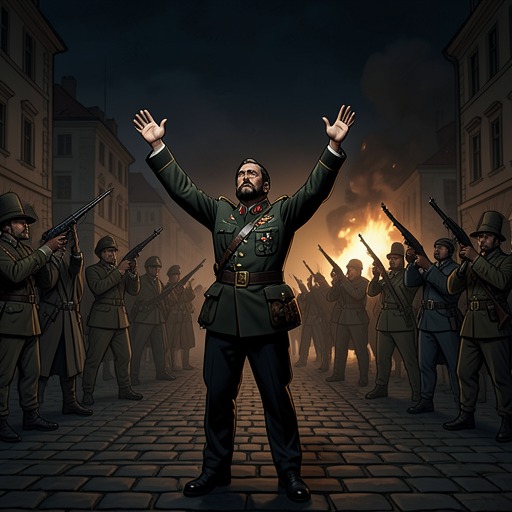
In the weeks before the proclamation, Luanda had been shaped by fear, flight, and the collapse of public order. In September, an unmarked black plane dropped leaflets claiming that Holden Roberto’s army was outside the city and urging the population to attack Eastern Europeans associated with the MPLA. Rysiek was then the only person from Eastern Europe in Angola. PIDE gangs searched for hotel residents in a city where, as the account describes it, no effective authorities remained. The leaflets and the rumours circulating alongside them made the danger feel immediate, while leaving residents uncertain about what was actually happening.
The population was also leaving. Portuguese refugees arrived in Luanda from distant parts of Angola in long columns of cars, hoping to catch flights out of the country. As hotels filled, many gathered around the airport, where people waited in the rain without knowing when they would leave or where they would be taken. Disputes over who should board, and efforts to stop planes from departing until others were included, exposed how difficult it was to organize the crowd. The air bridge was expected to carry half a million refugees away. The exodus was more than a change in population: it stripped the city of people and services just as political and military pressure intensified.
By October, the police had left. The garbagemen followed, and rubbish accumulated across streets, squares, and building entrances. These absences marked the breakdown of basic municipal functions in the same city where the independence ceremony would soon take place. On 4 November, armed men entered Rysiek’s hotel, demanded a list of guests, and brought residents downstairs for questioning. Almeyda, the MPLA press chief, arrived in the morning and ordered the men to let them go. The episode showed how readily armed groups could threaten civilians when ordinary procedures and dependable protection had failed.
The night of the declaration
The ceremony took place against the possibility of a renewed attack. On the day the Portuguese garrison sailed away, a truck removed statues of Portuguese governors, generals, travellers, and explorers from their pedestals, leaving the squares emptier. Foreign delegations arrived by plane, but only a few came. Rumours that a squadron from Zaïre might bomb the airport deterred others; the decision to destroy it, the account later notes, had been reversed at the last minute.
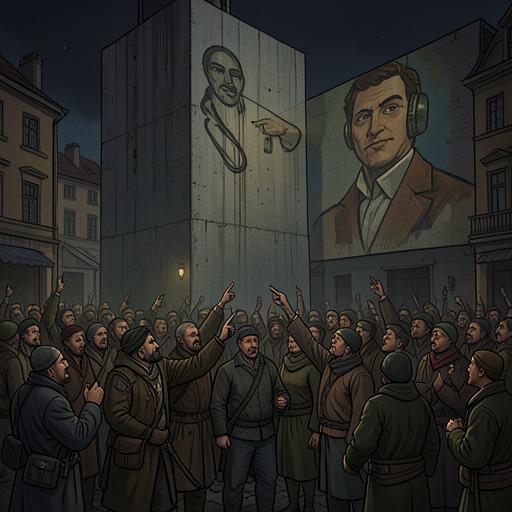
Thousands nevertheless assembled at night, despite requests to avoid large crowds in case an attack caused a massacre. The darkness and cloud cover concealed much of the gathering. At midnight, the cathedral clock struck. From a platform, Agostinho Neto read the proclamation of the People’s Republic of Angola. His voice broke, and he had to pause several times. When he finished, applause and cheers rose from the largely unseen crowd. There were no further speeches. The platform lights went out, and people dispersed quickly into the darkness.
The scene’s brevity did not make the act insignificant; it made the contrast between political declaration and material uncertainty especially clear. A new republic was proclaimed in a city that had lost its police, its sanitation workers, and much of its population. The ceremony supplied a public and formal announcement of independence, but the account gives no impression that the announcement could, by itself, settle who controlled the country or protect those gathered to hear it.
Independence and the continuing war
The front’s silence during the proclamation offered only a momentary counterpoint to the fighting. After the crowd dispersed, soldiers in Luanda fired into the air in celebration, and the night filled with disorderly gunfire. The sound followed rather than accompanied the formal proceedings: the declaration was made quietly, then answered by a celebration that was itself difficult to distinguish from the surrounding wartime uncertainty.
The information reaching the city had already made that uncertainty hard to judge. Comandante Ju-Ju’s radio communiqués, broadcast each evening, presented the war in a language of victories and resolve. Their form shifted with events: reports were brief and calm when things were going well, but grew longer and more emphatic when the situation deteriorated. In November, the account contrasts the optimistic broadcasts with the fact that half the country was in enemy hands. Calls to defend Luanda therefore competed with messages suggesting that the MPLA was close to victory. The proclamation occurred in this contested information environment, where confidence in the announced future could coexist with awareness of military danger.
The next morning, a reception for foreign delegations was held at Government Palace. Rysiek sent a dispatch to Warsaw reporting that the independence celebrations had been peaceful so far, while noting that FNLA gunners had spoiled the holiday atmosphere. The qualification matters: the ceremony’s quiet passage did not mean that the city was beyond attack, or that the conflict had paused across the country. The dispatch recorded a particular interval of relative calm, bounded by the continuing war.
A new state, a divided country
The proclamation established the People’s Republic of Angola in Luanda, but the account immediately places that declaration beside a divided political map. It says that the organizations involved had their actual headquarters in Kinshasa and that, for the moment, Angola was divided into two states with extraordinarily complicated borders. Independence, in this telling, was therefore both a founding declaration and the beginning of a precarious political reality: the state was proclaimed while rival powers and armed forces remained active, and the extent of its authority could not be taken for granted.
That tension also defines the ceremony’s narrative significance. The assembled crowd, the midnight announcement, and the cheers make independence visible as a collective event; the emptying city, the absent institutions, and the report of gunfire keep the event from becoming a simple image of national resolution. The proclamation changed Angola’s formal political status, but the evidence presents its immediate aftermath as unfinished. At the moment the new republic was named, the war, territorial division, and uncertainty over security remained part of the same story.